
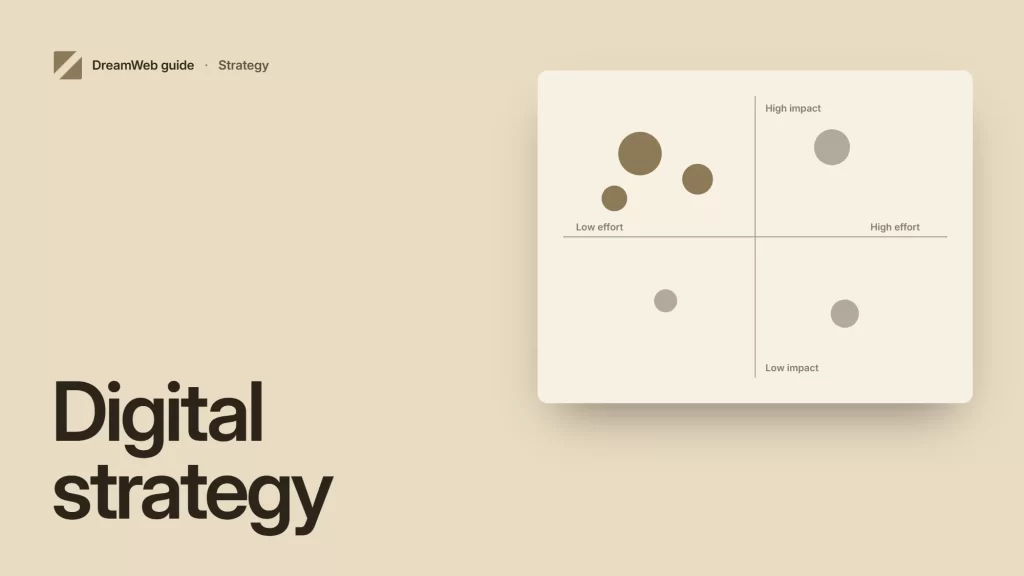
A digital strategy consultant should help the organisation choose where digital work creates value, what not to do and how decisions will be delivered and measured. The output is not a list of tools or a trend presentation.
When a consultant helps
Bring in support when teams are investing in disconnected platforms, the website and marketing operate separately, customer journeys cross several owners, reporting cannot support decisions or a major programme needs an evidence-led sequence.
What the strategy should connect
A practical digital strategy joins:
- customer and user outcomes;
- commercial goals and constraints;
- current services, channels and technology;
- data, measurement and governance;
- people, skills and operating capacity;
- security, accessibility and regulatory obligations;
- a sequenced portfolio of work.
The UK Digital Strategy frames digital foundations around infrastructure, data, regulation and security. A business strategy is smaller and specific, but the principle holds: digital change depends on operating foundations, not only front-end ideas.
A practical consulting process
Diagnose the current state
Interview decision-makers and delivery teams, review customer evidence, map systems and journeys, audit performance and record active initiatives. Keep confirmed facts separate from assumptions.
Define the outcomes
Choose a small set of measurable outcomes. “Become more digital” is not one. Reducing time to quote, increasing qualified self-service or connecting product data across channels can be.
Identify options and trade-offs
Compare improvement, replacement, integration and retirement. Price dependency, risk, operating cost and change capacity—not only software licences.
Sequence the roadmap
Put foundations before dependent features. Name owners, decisions, evidence gates and stop conditions. A roadmap should change when evidence changes.
Establish governance and measurement
Define who can approve platforms, data changes, customer-facing releases and new content routes. Measure outcomes and leading indicators, then review the assumptions behind the plan.
What you should receive
Expect a current-state map, decision principles, prioritised options, target operating view, delivery roadmap, risk and dependency register, measurement plan and a short leadership narrative.
Avoid strategies that assume every current project continues. Prioritisation requires stopping or delaying work as well as starting it.
A short buyer check
Name one result the work must change. It could be more good leads, fewer support calls, a faster sales step or a clean path for a new market. Keep the first aim clear.
For example, ask what must be true in 90 days. What will the team do first? What will it not do yet? Which data will show if the work helped? Who can say yes or no when a trade-off appears?
The best plan is not the longest plan. It gives the team a clear next move, a way to check it and room to learn.
Use digital marketing audit services when the immediate issue is channel and measurement performance, or ask DreamWeb to map the smallest useful digital route when the problem crosses website, content and systems.
Related reading: Customer journey mapping agency.