
Content marketing strategy services should decide who the content helps, which business outcome it supports, where it belongs and how it will be maintained. A calendar of topics is production planning, not strategy.
What the strategy must decide
A useful strategy answers:
- Which audiences and decisions matter?
- What evidence does the organisation have?
- Which page owns each search intent?
- What belongs on the website and what belongs on other channels?
- How will people move from useful content to a sensible next step?
- Who writes, reviews, approves and refreshes it?
- Which measures will change the plan?
The Department for Education’s content-strategy guidance connects user goals, organisational goals, production, testing and measurement. That is the right level of control.
A practical process
Audit what exists
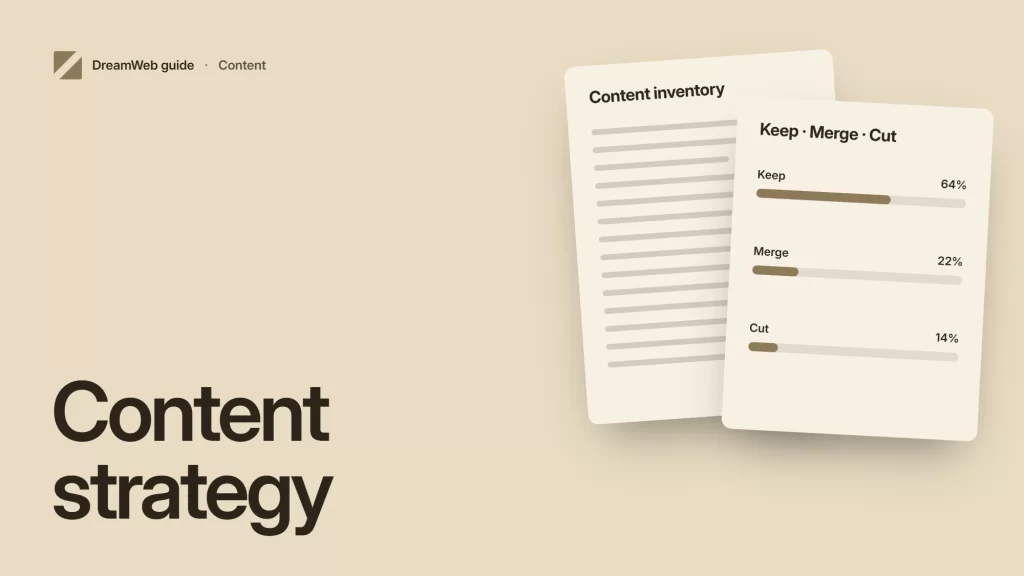
Inventory live, draft and proposed content. Record ownership, usefulness, evidence, traffic, conversion and overlap. Keep, improve, merge, redirect or remove before creating more.
Research audience needs
Use customer interviews, sales and support questions, search demand, analytics and competitor results. Separate observed needs from internal assumptions.
Map content to journeys and owners
Assign one canonical owner to each important intent. Supporting articles should deepen or connect to that owner rather than compete with it.
Define formats and distribution
Choose formats because they suit the task. A checklist may beat a thought-leadership article. A product comparison may need a table. Social and email should distribute or extend owned evidence, not create disconnected output.
Build the operating model
Name briefs, sources, approvals, image rights, accessibility, publishing, refresh and retirement. A strategy without capacity and governance becomes a wish list.
Measure commercial and user value
Track qualified movement, assisted conversion, useful search visibility, subscriptions, sales use and support reduction where relevant. Avoid declaring success from page views alone.
What you should receive
Expect an audience and journey map, content inventory, page-ownership model, themes and formats, distribution plan, editorial workflow, measurement plan and a sequenced backlog with reasons.
Google advises creating helpful, reliable, people-first content, not publishing at scale simply to attract search visits. A credible strategy should contain fewer, stronger owners when the evidence supports that.
A short buyer check
Start with one buyer need. Keep it small and clear. It may be “how much will this cost?”, “will this fit?” or “how do we switch without risk?”
For example, list the page that should answer it, the proof it needs, the person who can check that proof and the next page a reader should see. Does one page own the need? If not, the plan will make more noise than value.
Set a review date too. Content can go stale. A good plan says what to update, who will do it and when the team will decide to stop.
Start with content audit agency if the current estate is unclear, or ask DreamWeb to turn demand and evidence into an owned sequence.
Related reading: SEO copywriting agency.